


August 17, 2026
Field service businesses increasingly depend on mobile technology to coordinate technicians, manage customer requests, and maintain visibility over operations. When employees spend most of their working hours at customer locations, relying on office-based systems, spreadsheets, phone calls, and paper reports can create unnecessary delays.
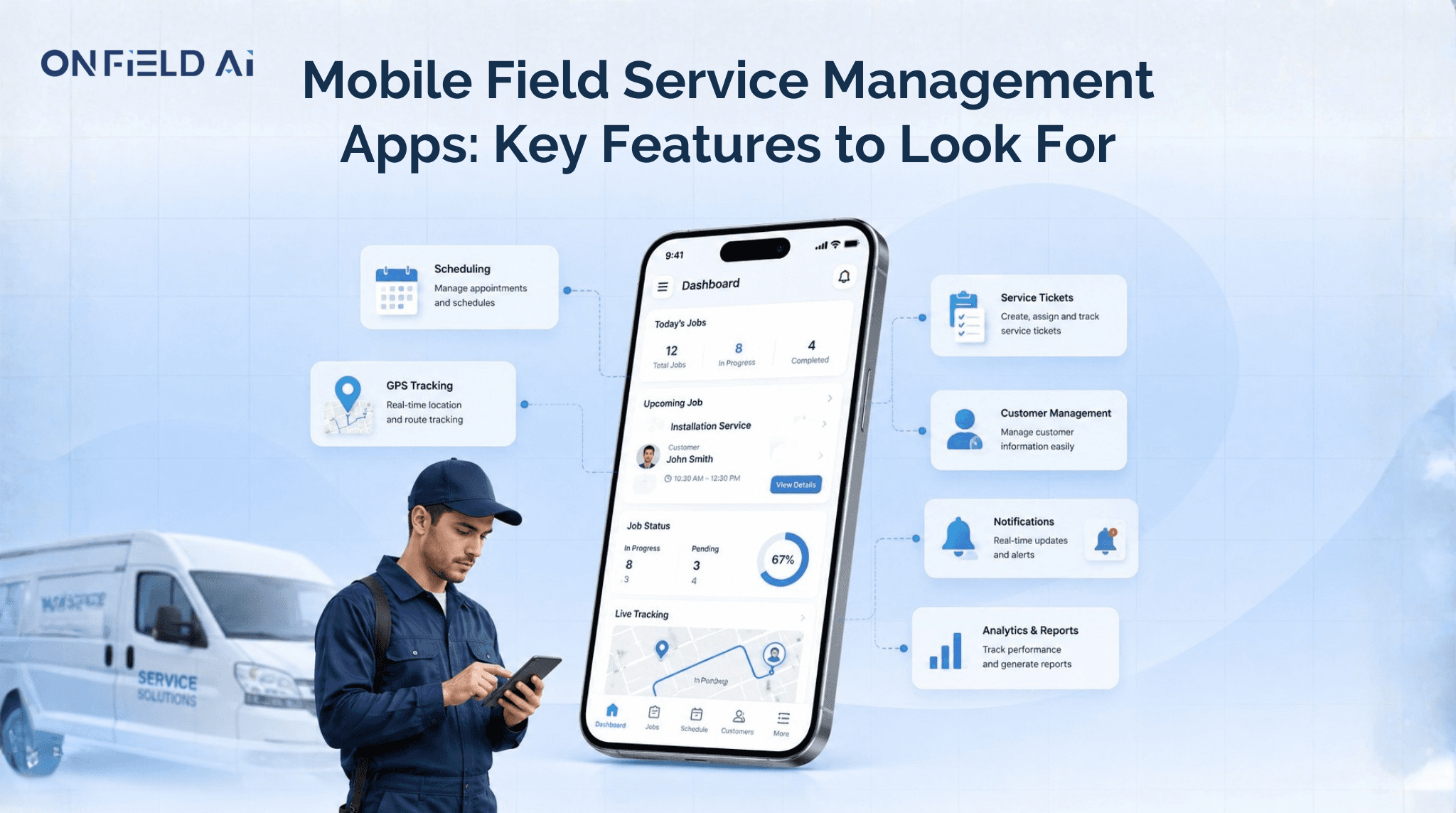
Modern Mobile Field Service Management Apps give technicians and managers access to essential operational information from virtually anywhere. From job scheduling and GPS tracking to digital reporting and customer communication, mobile technology can connect every stage of field service delivery. A Service Management Software and App further brings service requests, workforce coordination, scheduling, reporting, and customer management together within one connected platform.
For businesses evaluating field service software, choosing an app with the right combination of features is essential. The right solution can improve technician productivity, reduce administrative work, accelerate response times, and create a more consistent customer experience.
Why Mobile Technology Matters in Field Service Management
Field technicians need accurate information when they are on the move. They may need to access customer details, equipment history, work instructions, previous service reports, or appointment information without contacting the office repeatedly.
A mobile field service application creates a direct connection between technicians and management. Employees can receive assignments, update job statuses, record service information, and communicate progress in real time.
For businesses researching Service Management Software, mobile accessibility should be considered a core requirement rather than an optional feature. A mobile-first approach enables service organizations to operate with greater flexibility while reducing the communication gaps commonly associated with traditional field operations.
Key Features to Look for in a Mobile Field Service App
1. Mobile Work Order Management
Work orders are at the heart of field service operations. A reliable mobile application should allow technicians to view assigned jobs, access customer information, check service instructions, update job progress, and close completed work directly from their smartphones.
Managers should also be able to monitor open, scheduled, ongoing, and completed work orders through a centralized dashboard. This creates greater transparency across the entire service lifecycle.
2. Smart Scheduling and Dispatch
Efficient scheduling can directly influence technician productivity and customer satisfaction. Modern applications should help managers assign jobs according to technician availability, location, workload, skills, and service priority.
Intelligent dispatching reduces unnecessary travel and helps businesses respond to urgent requests more quickly. Automated scheduling also minimizes conflicts and reduces the administrative burden on service managers.
3. GPS-Based Technician Tracking
Real-time location tracking provides managers with valuable visibility into field activities. Businesses can understand technician locations, monitor travel patterns, and determine whether employees are progressing according to their schedules.
GPS tracking can also improve customer communication. When managers have accurate information about technician availability and location, they can provide customers with more reliable appointment updates.
4. Digital Service Reports
Paper-based reports can be difficult to maintain, retrieve, and share. A modern mobile app should allow technicians to complete service documentation directly from the field.
Technicians can record job details, upload photographs, add service notes, complete inspection checklists, and capture digital signatures. This information can then be transferred to the central system immediately, reducing paperwork and improving reporting accuracy.
5. Preventive Maintenance Scheduling
Reactive maintenance can result in unexpected equipment failures and expensive emergency service calls. A capable field service application should support recurring maintenance schedules and automated reminders.
Businesses can plan inspections, servicing, and maintenance visits in advance while ensuring technicians receive assignments at the appropriate time. This is particularly valuable for HVAC, industrial equipment, healthcare devices, elevators, and other assets requiring regular maintenance.
How Mobile Apps Improve Technician Productivity
Technician productivity depends heavily on how quickly employees can access the information required to complete their work. Mobile applications eliminate the need for technicians to repeatedly contact office staff for basic job details.
A technician can access customer history, equipment information, service instructions, previous reports, and assigned tasks from one device. Once a job is completed, the technician can immediately submit the report rather than waiting until returning to the office.
Businesses using FSM Software solutions can therefore create a more connected workflow where information moves continuously between field employees and management. This reduces administrative delays while allowing technicians to focus more time on actual service delivery.
Customer Communication and Service Experience
Customers increasingly expect transparency throughout the service process. They want to know when a technician is arriving, what work is being performed, and when the issue has been resolved.
A strong mobile field service platform can support automated notifications, appointment updates, service confirmations, and digital documentation. These capabilities help businesses create a professional customer journey while reducing the need for manual communication.
For organizations expanding their local service operations, Field Service Management Software Ahmedabad can provide the operational foundation needed to coordinate growing technician teams and customer appointments efficiently.
Analytics and Real-Time Operational Visibility
Mobile field service technology becomes even more valuable when information collected by technicians is converted into actionable insights. Managers can analyze technician productivity, service completion rates, response times, recurring problems, workload distribution, and customer service performance.
Real-time dashboards allow decision-makers to identify operational bottlenecks before they become larger problems. Businesses can also use historical information to improve scheduling, resource allocation, and preventive maintenance strategies.
Organizations evaluating Service Management Software in India should therefore consider analytics capabilities alongside basic scheduling and workforce management features.
Security, Scalability, and Ease of Use
A mobile application should be simple enough for technicians to use without extensive training. Complicated interfaces can reduce adoption and ultimately limit the value of the software.
Security is equally important because service platforms may contain customer information, employee data, service records, and business-critical information. Look for solutions that provide secure access, appropriate user permissions, reliable cloud infrastructure, and regular system improvements.
Scalability should also be considered. The application should support additional technicians, customers, service locations, and workflows as the organization grows.
Why Onfield AI Is Built for Modern Field Teams
Onfield AI combines workforce coordination, service management, automation, mobile accessibility, reporting, and operational analytics within one connected platform. It helps businesses bring office teams and field employees together while maintaining real-time visibility into service activities.
With features designed around technician productivity and operational efficiency, Onfield AI enables organizations to simplify job management, automate repetitive workflows, improve field visibility, and deliver more consistent customer experiences.
Whether a business manages technicians, engineers, maintenance teams, installation professionals, or distributed service employees, a connected mobile platform can provide the flexibility needed to scale field operations efficiently.
Final Thoughts
Mobile technology has become an essential component of modern field service management. The right application should do more than display work orders—it should connect technicians with managers, customers, and operational workflows throughout the service lifecycle.
When evaluating a mobile field service solution, prioritize features such as work order management, intelligent scheduling, GPS tracking, digital reporting, preventive maintenance, customer communication, analytics, security, and scalability.
A well-designed mobile platform can reduce administrative complexity, improve technician productivity, accelerate service delivery, and create stronger customer relationships. For businesses investing in digital transformation, choosing the right field service management app can become a major competitive advantage.